Understanding Print Bleed, Trim, and Safety Margins
Think back to when you were a kid, standing on a stool beside someone you loved — maybe a parent or grandparent — rolling out cookie dough on the kitchen counter. That memory holds the perfect lesson for how print bleed works.
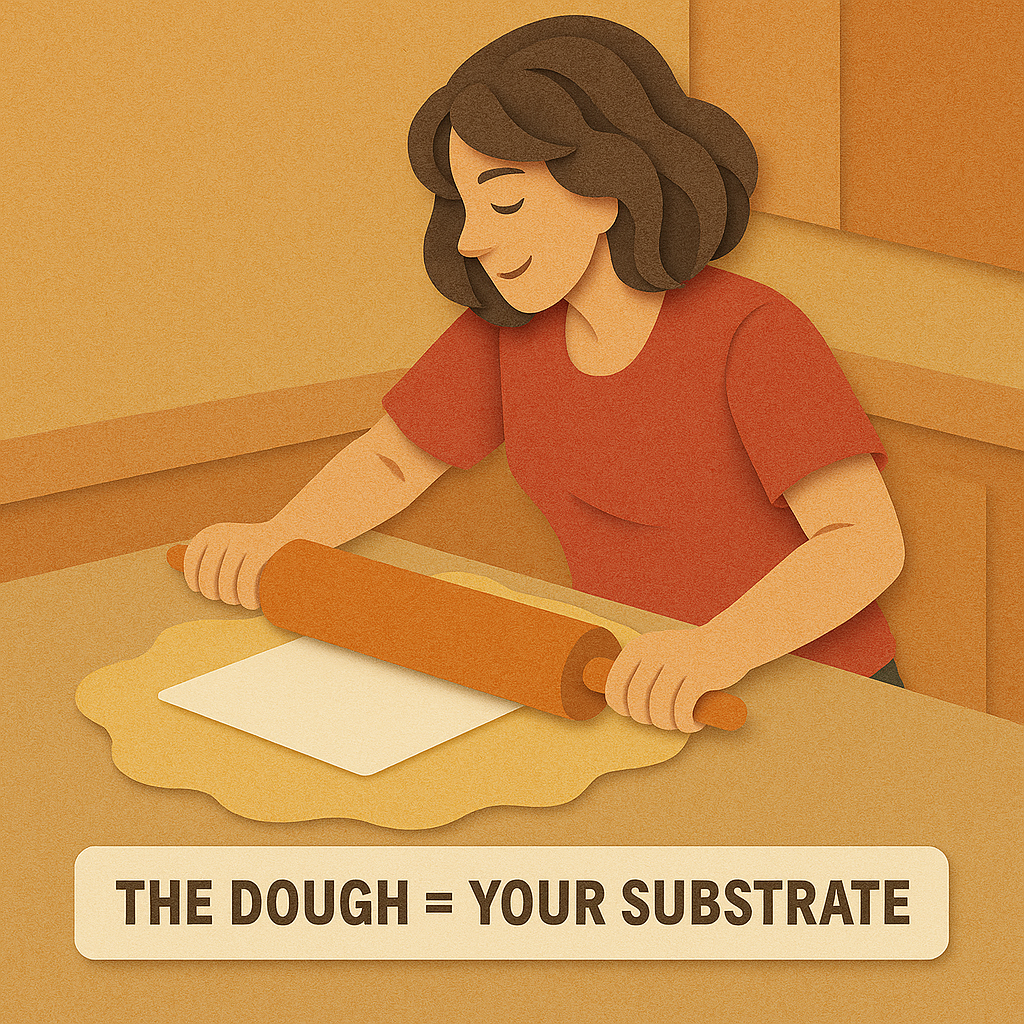
The Dough = Your Substrate (Paper or Material)
When you roll out cookie dough, you don’t just make one cookie at a time — you make one big, even sheet that you’ll cut shapes from later. That sheet of dough is like the paper or material your design will be printed on — your substrate. Everything starts on that big, shared surface before it’s trimmed into individual pieces.
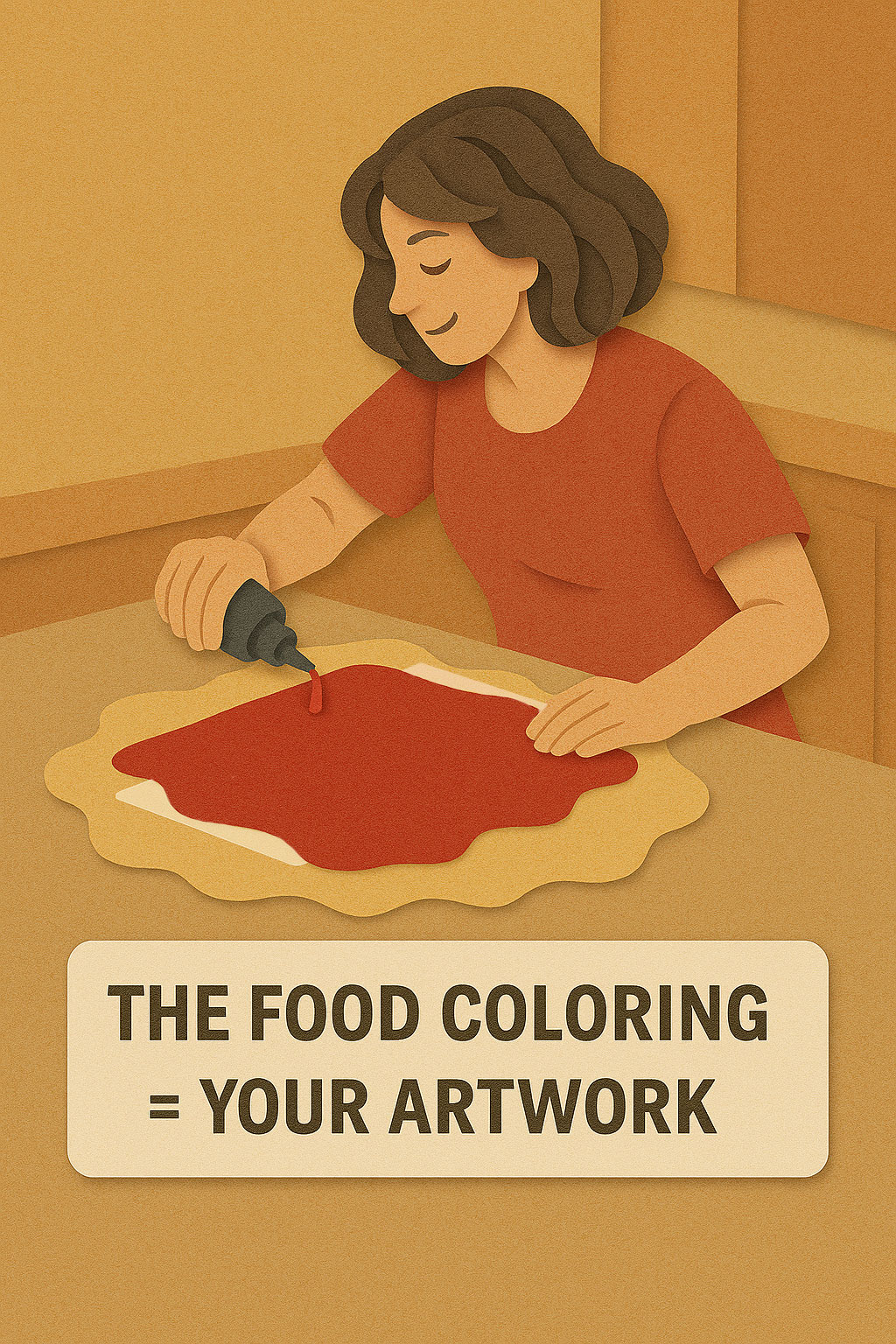
The Food Coloring = Your Artwork
Now imagine you’re coloring that dough before cutting the cookies. You wouldn’t just color inside the exact shapes where the cookie cutter will land — that would be nearly impossible to line up perfectly, and you’d end up with some cookies that have bare dough showing around the edges.
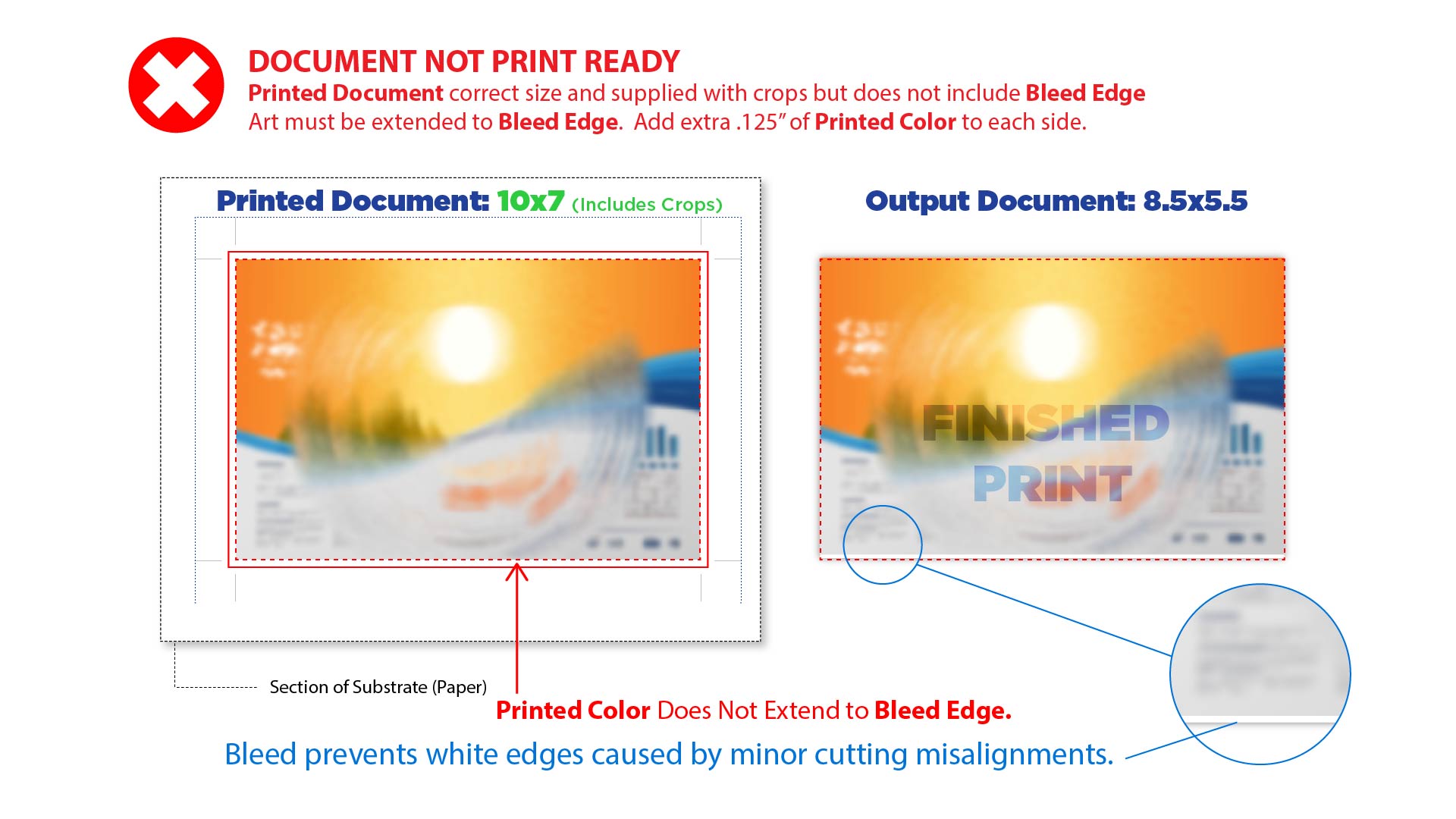
Instead, you spread the color over the entire sheet of dough, making sure the color goes past every future cut line. That’s what bleed does in printing: your background colors, patterns, or images extend slightly beyond the final trim line so that, after cutting, every print looks beautifully filled edge to edge — no white gaps.
It’s also how you get color consistency. Just like how every cookie comes out evenly colored when you spread the icing across the whole dough, every print looks consistent when the color extends across the full sheet.
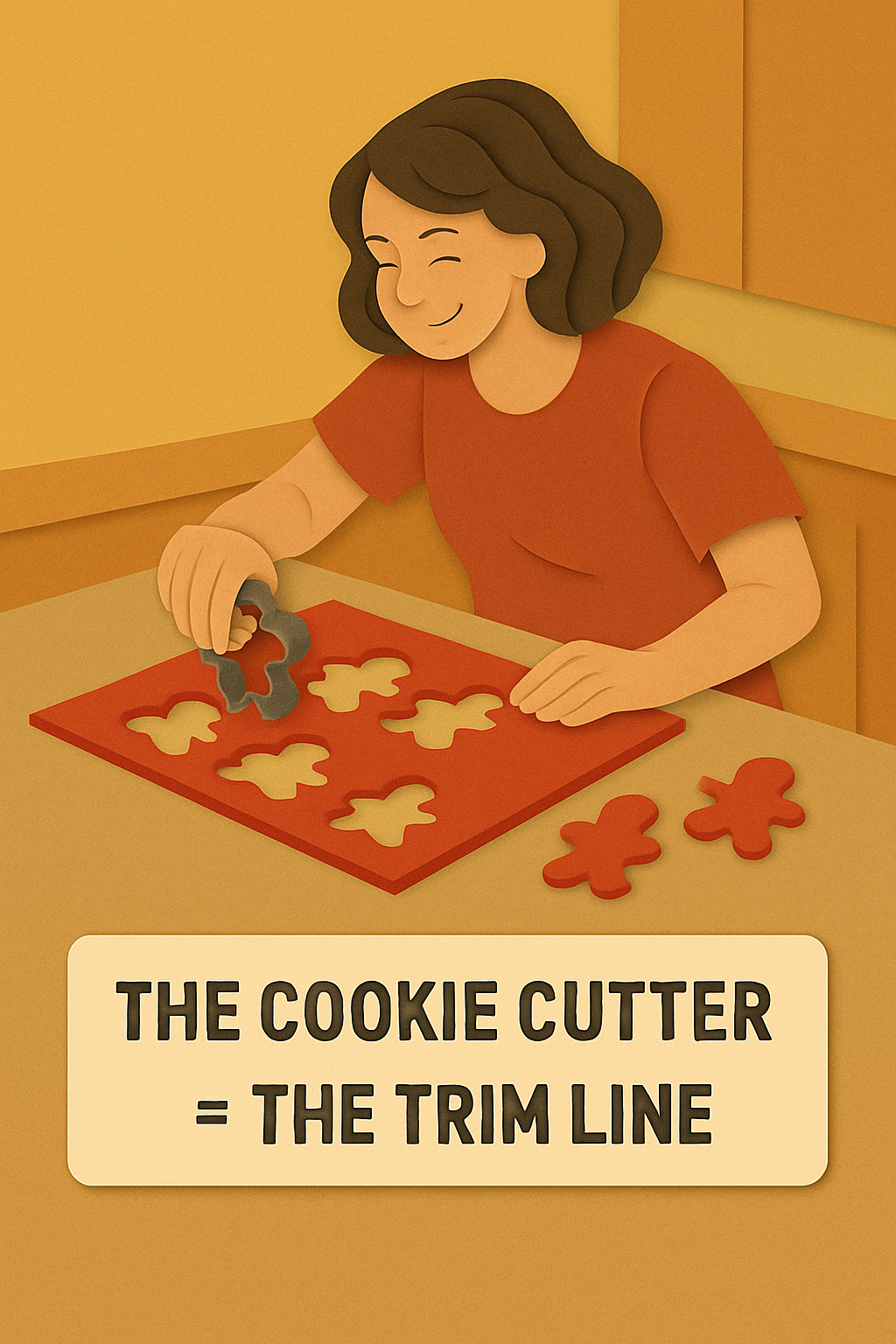
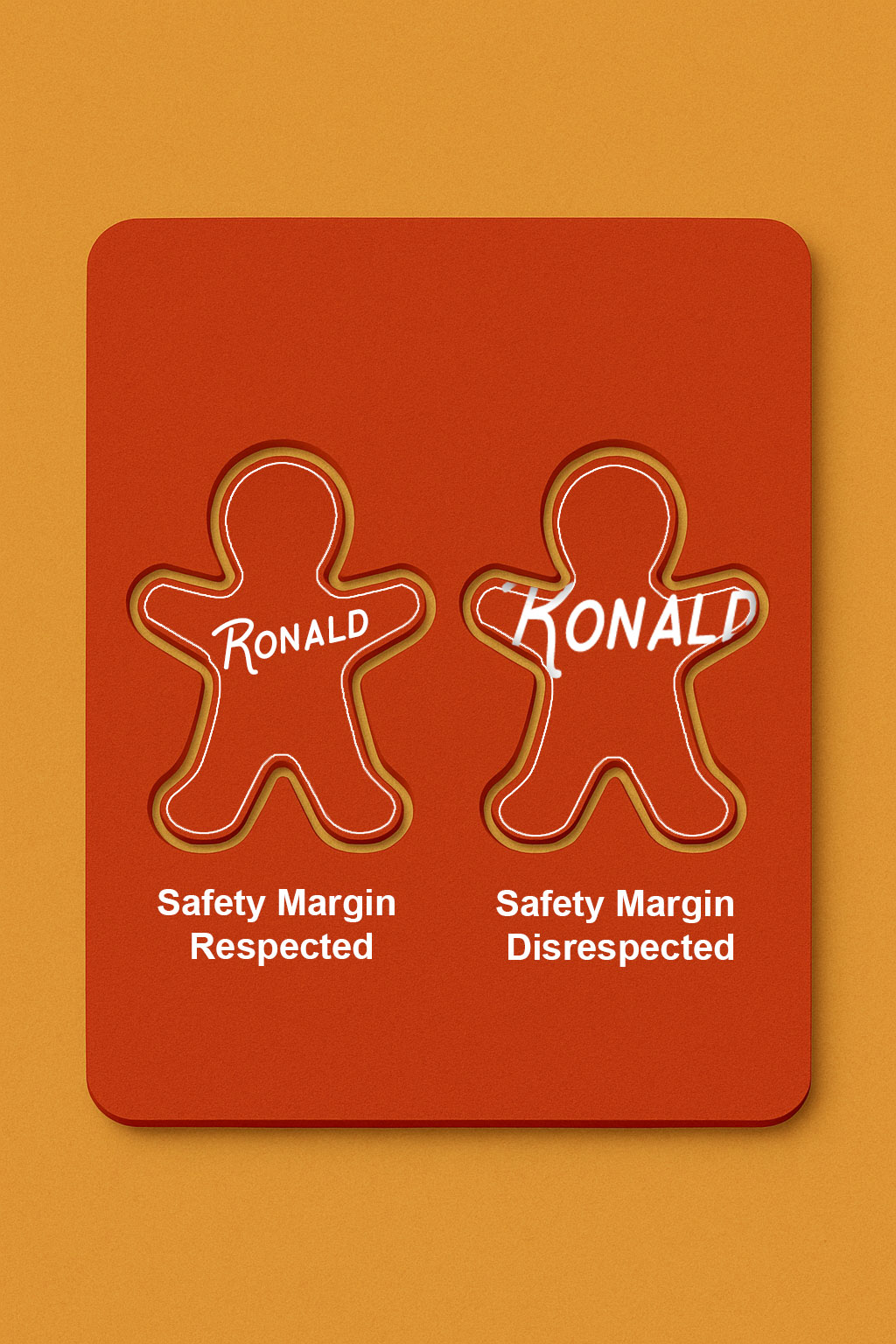
The Cookie Cutter = The Trim Line
Once your dough is colored, you use the cookie cutter to make your shapes. Even when you’re careful, the cutter might shift a tiny bit — a millimeter to the left or right. But since you colored past the edges, the cookies still come out looking perfect.
That’s the same in printing: a small shift in cutting is called tolerance, and bleed makes sure no unwanted white edges appear.
The Safe Zone = The Center of the Cookie
When decorating cookies, you usually keep the important parts — like text, sprinkles, or faces — near the middle. You wouldn’t want them trimmed off by the cookie cutter. That’s your safe zone in printing: keep your important text and logos away from
the edge so they stay fully intact.
If a file lacks bleed, you might see thin white edges after trimming—this happens because the printer’s cut line doesn’t perfectly match the artwork’s edge. Adding bleed prevents that by giving a small buffer of extra artwork to trim away.
Bleed — Do & Don’t Examples
Below are examples showing how bleed affects a printed document. Click any image to enlarge.
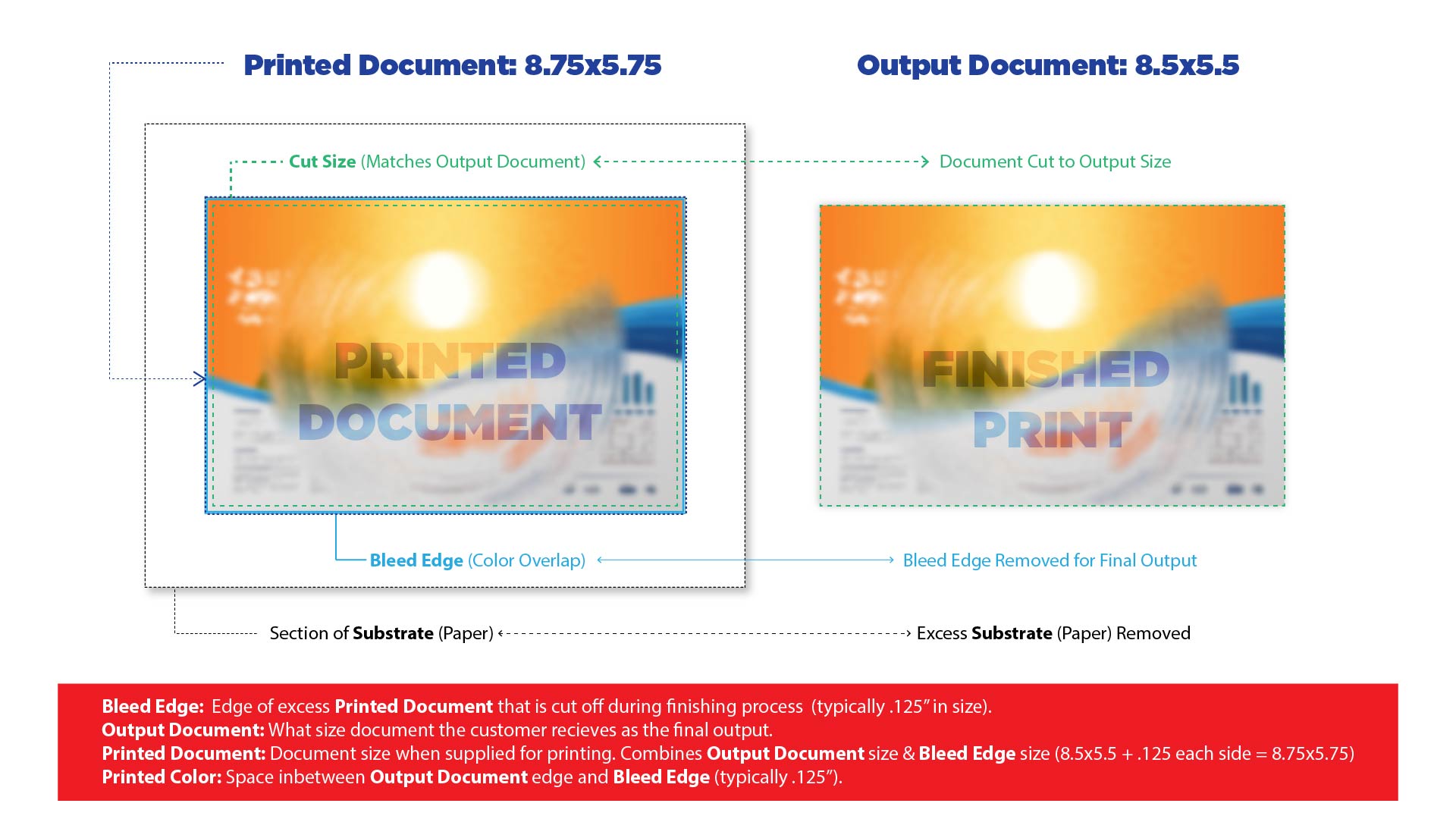
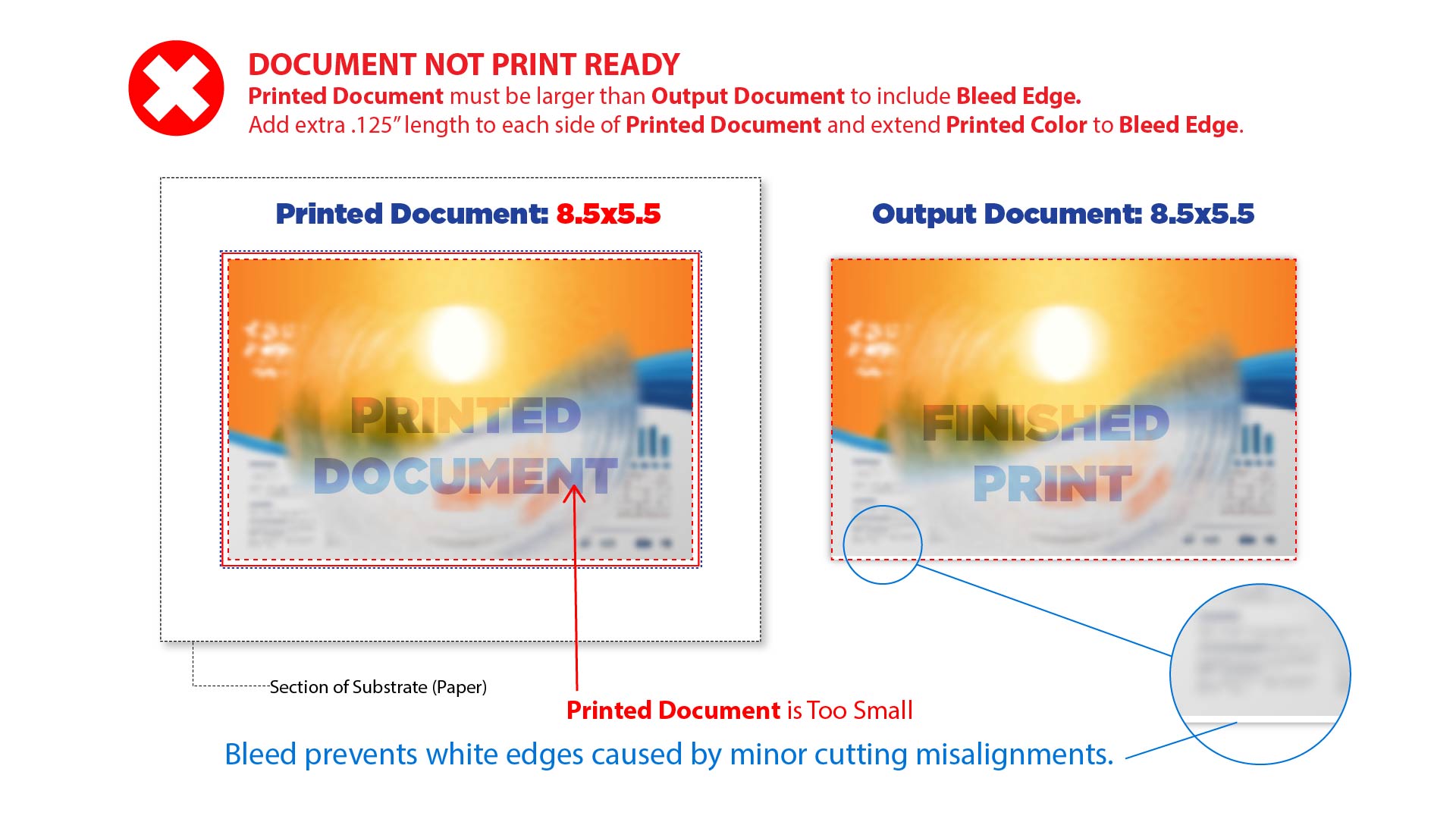
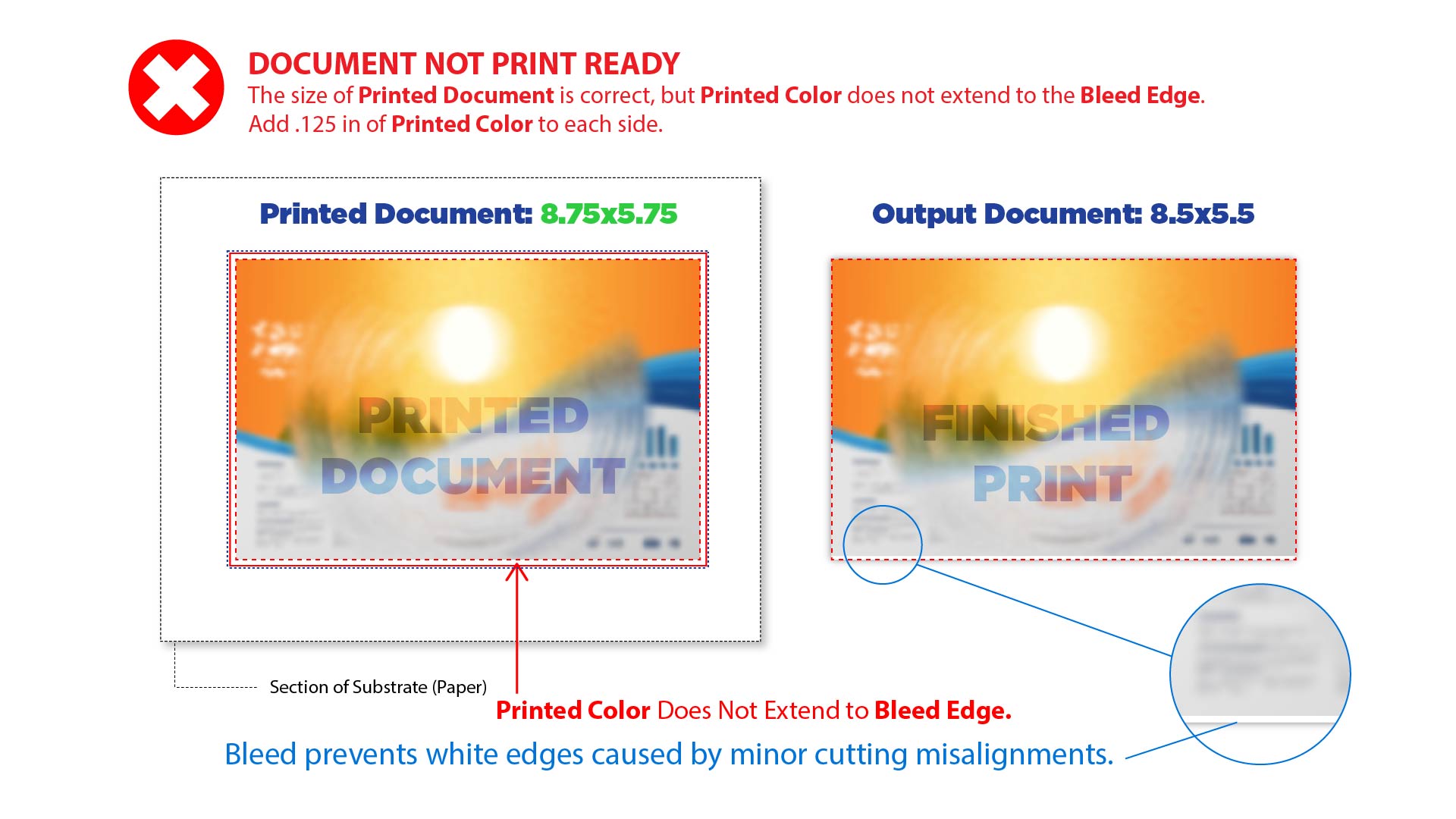
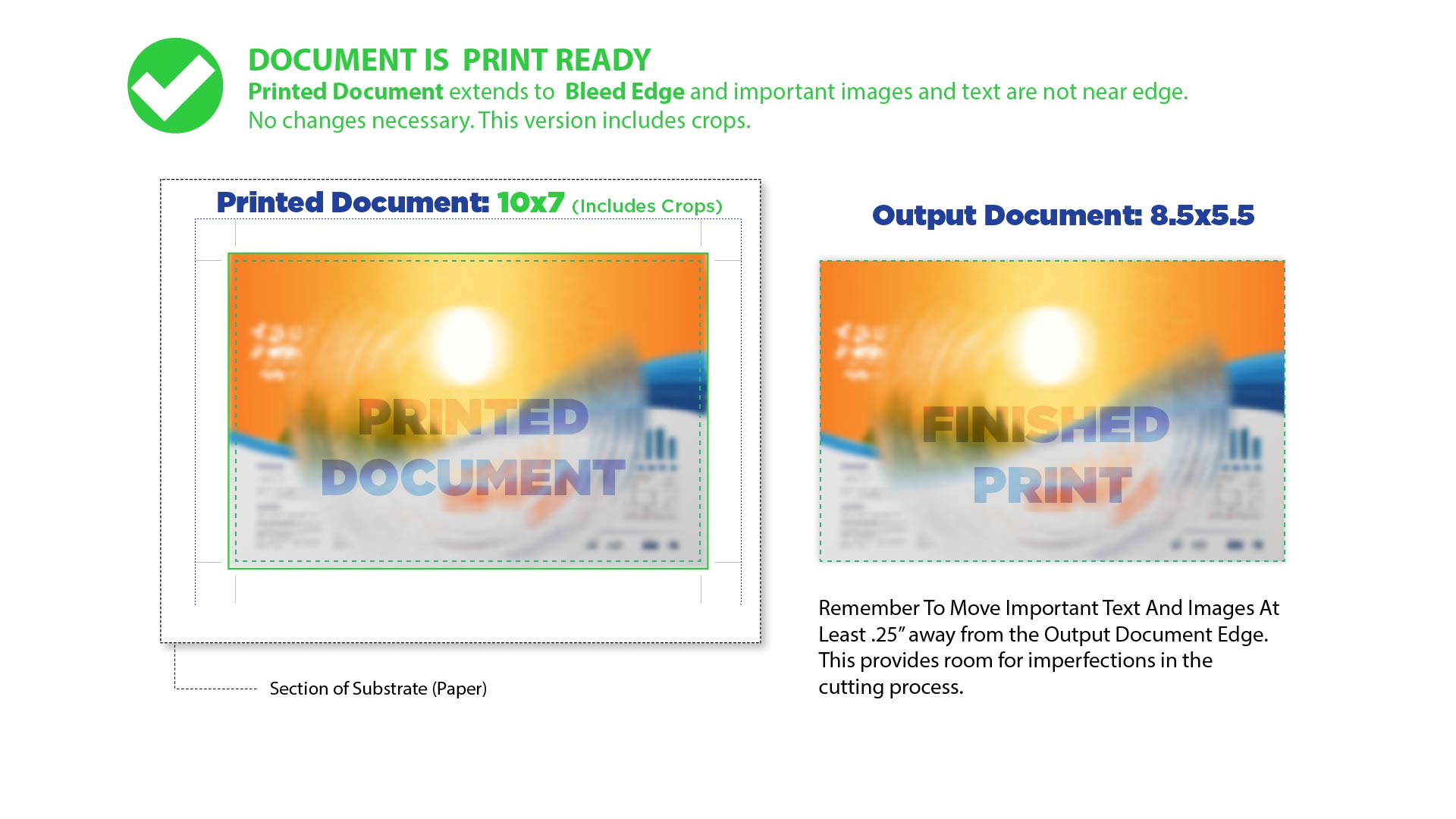
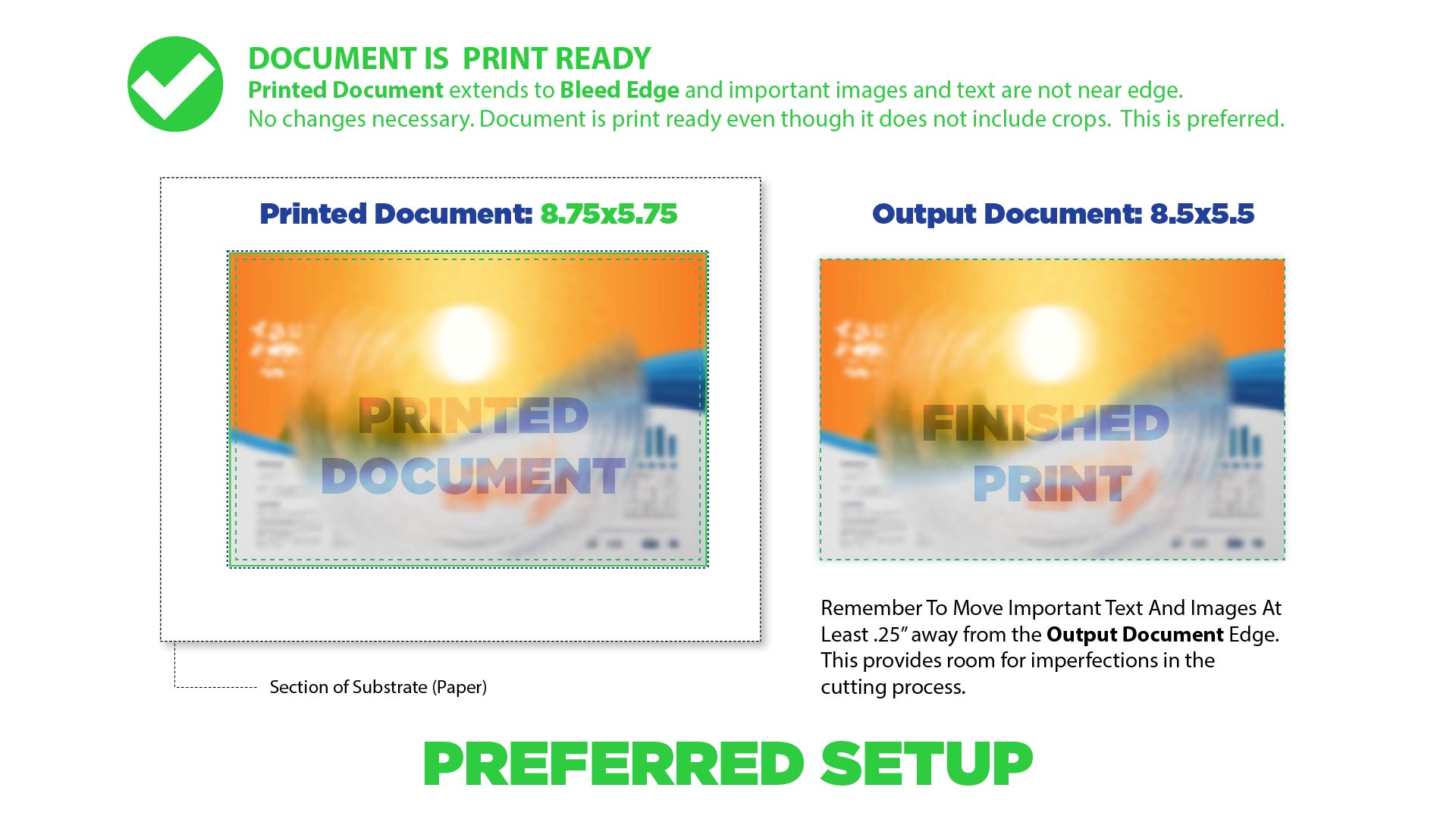
Figure 1: Overview of a print layout showing the bleed area and a finished document.Figure 2: Incorrect setup — Print Document not sized properly.Figure 3: Incorrect setup — Printed Color does not extend all the way to the Bleed Edge.Figure 4: Incorrect setup - Even though the Printed Document has crops, the Printed Color does not extend all the way to the Bleed Edge .Figure 5: Print-ready document with bleed with crops.Figure 6: Print-ready layout with bleed but without crops.
Tip: Most print projects require at least ⅛ inch (0.125") or 3mm of bleed on each side.
Before You Start: Understanding Bleed, Trim & Safety Margins
Imagine making cookies as a kid — you roll out a big sheet of dough, use food coloring to shade the dough completely, and then press your cookie cutter into the dough to get a final product.. That’s exactly how printing works.
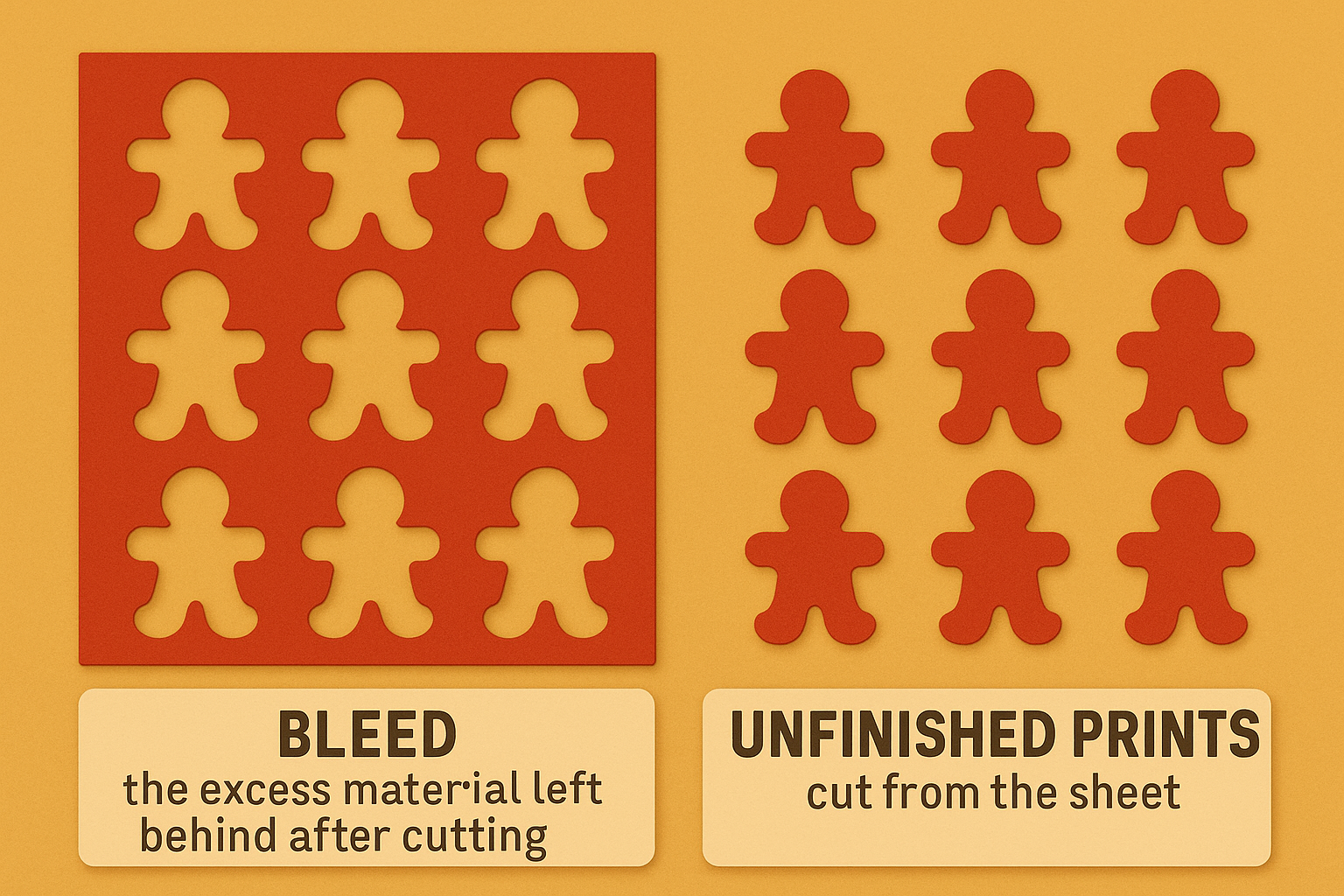
The dough is your paper, the food coloring is your artwork, and the cookie cutter is the trim line. You spread color past where the cutter will land — that’s your bleed—
so every print has clean, edge-to-edge color even if the cut shifts slightly. The bleed is basically just the excess ink covered paper that gets cut off to keep your print consistent.
Finally, keep your text and logos in the center and away from the cutting edge — your safe zone — so nothing important gets trimmed off.
For a more detailed explaination, see "What is Bleed?"
How to Download a Canva File with Bleed for Print
Simple Instructions
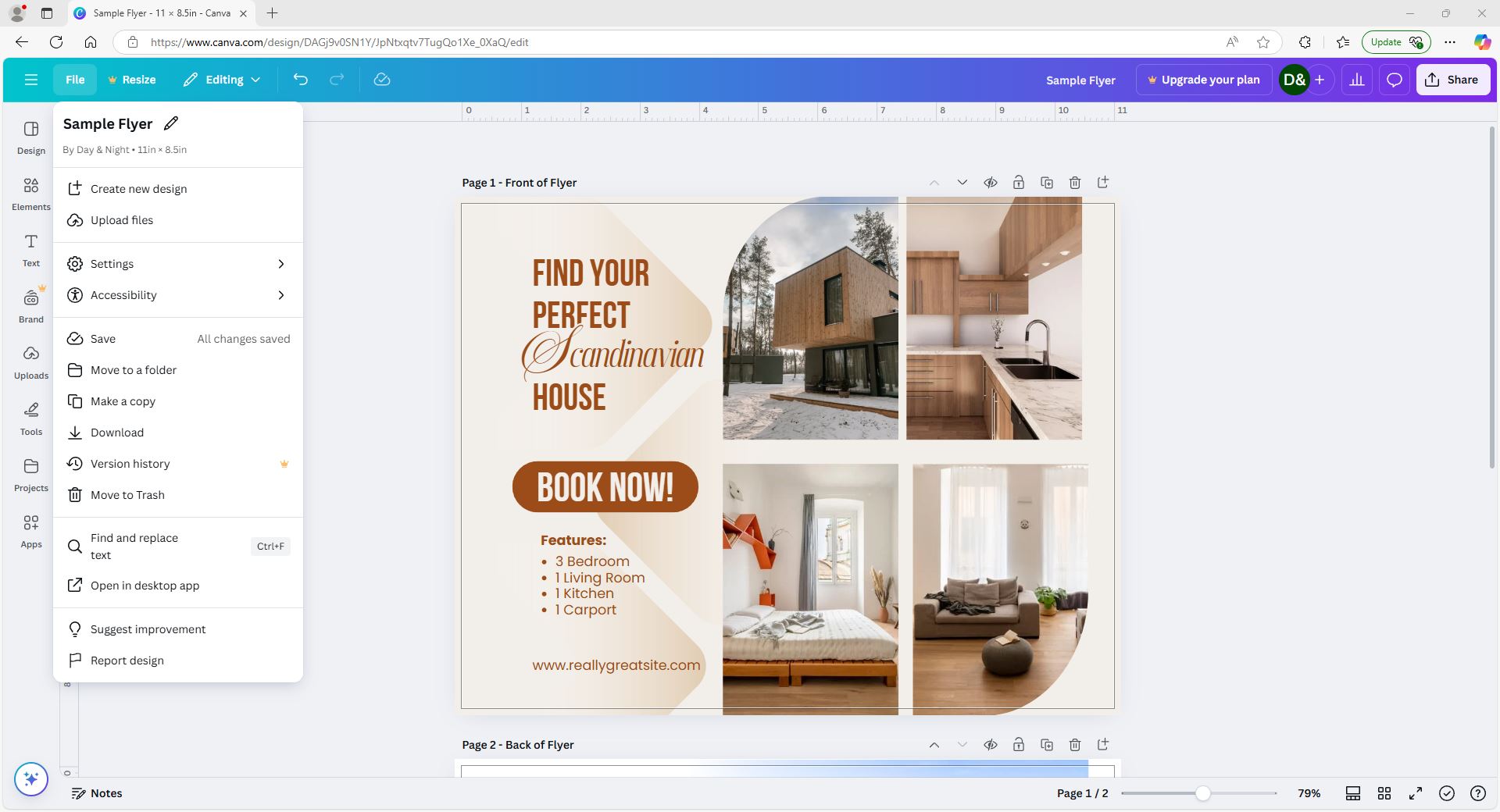
Open your Canva project and select File in the top menu.
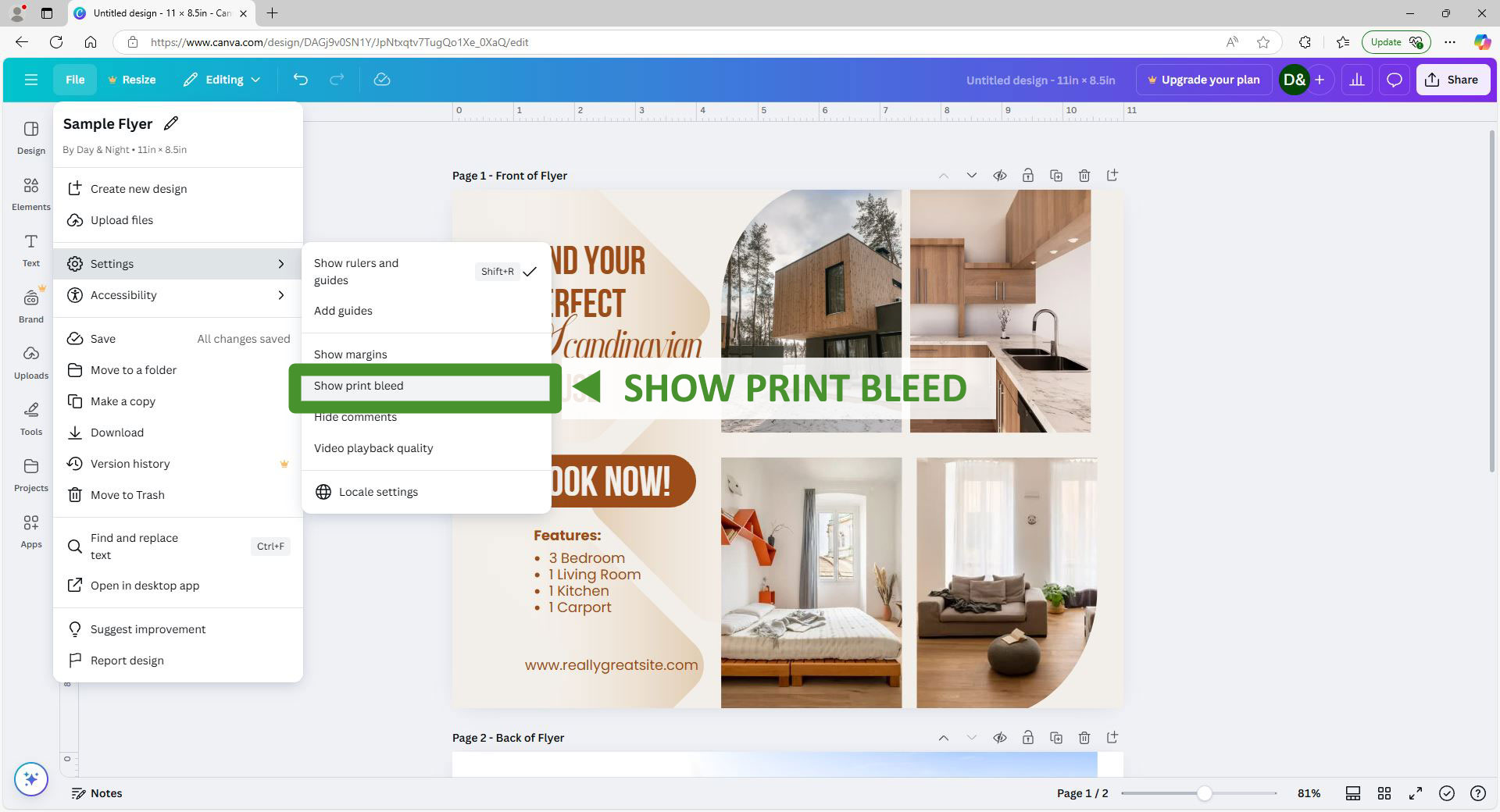
Scroll to Settings and enable Show print bleed.
Resize your background and images to cover any gaps showing on the bleed margin.
Select Share in the top-right corner, then click the Download icon in the bottom-left of the Share menu.
Choose PDF Print as the file type and check the box for Crop marks and bleed.
Click the large purple Download button to save your file.
Example: Accessing File and Download settings in Canva
Guided Walkthrough
1. Get Started on the Homepage
From the Canva homepage, you can open an existing project or create a new one. We recommend starting with a Custom Size document if creating a new project.
Create Custom Size
Open Existing Project
2. Checking for Size
Once your design is complete, verify that it’s the correct size:
Select File in the menu bar.
View the file size beneath your document title to ensure it matches your desired print dimensions.
Scroll to Settings and select Show Print Bleed. Enabling Show Ruler & Guides is also helpful.
Checking document size and enabling print bleed in Canva
3. Check for Bleed
The importance of bleed: Bleed ensures your design extends to the edge of the paper and prevents white borders from appearing. Canva provides a standard ⅛ inch (0.125”) bleed on each side when “Show print bleed” is enabled.
A Canva document with bleed and crop marks will be approximately 0.47” larger in both dimensions than the intended size. For example, a 3.5” x 2” business card will download as a 3.97” x 2.47” file.
Example: Design without bleed (left) vs. with bleed enabled (right)
4. Adjust Backgrounds & Images
After enabling bleed, a thin black line will appear. Extend any background colors or images beyond this line to ensure full coverage. Failing to do so may cause unwanted white edges after trimming.
Adjusting background and image edges to cover the bleed area
5. Download the File
Click the Share button in the top-right corner.
Select the Download icon from the dropdown menu.
Choose PDF Print as the file type and make sure Crop marks and bleed are checked.
Click Download — your PDF will be saved to your computer. Files with bleed and crops should be 0.47” larger than the desired print size.
Selecting PDF Print with crop marks and bleed before downloading
This guide explains how to prepare and export your file for professional printing — whether you’re designing in Canva, Adobe InDesign, or Word.
Single Pages Preferred: No Spreads, Please.
📘 Submitting from Canva
Set your document size: Choose Custom Size matching your trim (e.g., 8.5 × 11 in). Design as single pages — not facing spreads.
Add bleed: Go to File ▸ Settings ▸ Show print bleed. Extend backgrounds/photos to the edge; keep text/logos ≥ ⅛″ (3 mm) inside.
Check your page count: Booklets must have page counts in multiples of 4 (4, 8, 12, 16…).
Review color: Canva uses RGB; colors may print slightly darker. Note Pantone / CMYK equivalents if color-critical.
Download print-ready PDF:Share ▸ Download ▸ PDF Print. Check Crop marks and bleed and Flatten PDF (if available).
Inspect your file: Open your PDF to confirm crop marks, bleed, and correct page order.
Upload to OnPrintShop: In your order form, choose Upload Files → select the PDF Print file. Optionally note “8.5 × 11 booklet, saddle-stitched.”
Approve proof: Review layout and pagination before giving final approval.
💡 Pro Tips
Page order: Cover → Back in sequence.
Spine alignment: Leave extra margin near center folds.
Images: Minimum 300 ppi for sharp print.
Fonts: Canva embeds fonts automatically.
✅ What to Upload
File Type
Format
Bleed
Color
Notes
Newsletter / Booklet
PDF Print
0.125″ all sides
RGB (auto)
Crop marks checked
📘 Submitting from Adobe InDesign
Create a new document:File ▸ New ▸ Document → set final trim (e.g., 8.5 × 11 in). Disable Facing Pages for booklets. Single-page Preferred.
Add bleed: In New Document dialog, set 0.125″ (3 mm) on all sides. Extend graphics into bleed; keep text/logos inside trim.
Design the pages: Maintain correct order (cover → back). Use Master Pages for repeated elements.
Use CMYK colors: Avoid RGB; select Pantone spots if needed.
Prepare for export: Verify images are 300 ppi and margins are correct.
Package the file:File ▸ Package → include Fonts and Links folders if requested.
Export PDF:File ▸ Export ▸ Adobe PDF (Print) → Preset High Quality Print.
Under Marks & Bleeds: check Crop Marks and Use Document Bleed Settings.
Under Output: select Convert to Destination (Document CMYK).
Upload to OnPrintShop: Attach the exported PDF in your order form; add any print notes.
Approve proof: Review layout, fonts, and images before approving.
💡 Pro Tips
Page count: Multiple of 4 pages required (4, 8, 12…).
Spine margin: Add extra inner space for thick booklets.
Fonts: Embed when packaging or outline if needed.
Images: Use 300 ppi for high quality print.
✅ What to Upload
File Type
Format
Bleed
Color
Notes
Newsletter / Booklet
PDF Print
0.125″ all sides
CMYK
Crop marks checked
How to Submit a Newsletter or Booklet from Microsoft Word
Follow these steps to prepare and export your Microsoft Word file so it prints correctly and matches professional press standards.
📘 Submitting from Microsoft Word
Set your page size: Go to Layout ▸ Size ▸ More Paper Sizes and enter your final trim size (e.g., 8.5″ × 11″).
For booklets, create individual pages in order (not spreads).
Set margins and safe area: In Layout ▸ Margins ▸ Custom Margins, leave at least 0.5″ (12.7 mm) on all sides for text and logos. If you plan to include bleeds, design slightly larger (see below).
Add bleed (optional): Word doesn’t support real bleed settings, but you can simulate bleed by extending background colors, photos, or shapes slightly beyond the page edge (⅛″ or 3 mm). The extra edge will be trimmed off during
printing.
Use high-resolution images: - Insert images at 300 ppi or higher. - Avoid screenshots or web-resolution images (72 ppi). - Do not copy-paste from the web — always use Insert ▸ Pictures ▸ This Device.
Check color mode: Word uses RGB color by default. Colors may shift slightly during CMYK print conversion. If exact color is important, note your brand or Pantone references in your order comments.
Review page count: Booklets must be in multiples of four pages (4, 8, 12, 16, etc.) for saddle-stitch binding. Add blank pages as needed at the end of your file.
Save a copy as PDF: - Go to File ▸ Save As or File ▸ Export ▸ Create PDF/XPS Document. - Choose **PDF** as the file type. - Click **Options** and check: ✅ Document structure tags for accessibility (optional) ✅ ISO 19005-1 (PDF/A) for long-term compatibility (optional) - Click **OK** and then **Publish**.
Inspect your PDF: Open the exported PDF to ensure all pages are included and no elements shifted or clipped.
Upload to OnPrintShop: In your product order form, click Upload Files and attach the PDF you created. Optionally, leave a note such as “8.5 × 11 newsletter, single-sided, 4 pages.”
Approve your proof: Review your online or emailed proof for layout accuracy, text flow, and image quality. Approve only when satisfied.
💡 Pro Tips
Fonts: Use standard fonts or embed custom fonts before export (File ▸ Options ▸ Save ▸ Embed fonts in the file).
Margins: Keep all text and logos at least ¼″ from the edge to avoid trimming issues.
Page numbers: Insert them through Insert ▸ Page Number to maintain consistent placement.
Images: Avoid dragging or resizing beyond 200% — it reduces print clarity.
How to Submit Direct Mail & EDDM to Our Print Shop
This guide explains how to prepare, export, and submit files for Direct Mail (addressed) and EDDM (Every Door Direct Mail). If you’re unsure which option is right for your campaign, skim both sections and use the
checklists before you upload.
📬 Direct Mail (Addressed Mailings)
Direct Mail is best when you have a named list (customers/prospects) and want precise targeting, personalization, and tracking.
Timeline/class approved and postage estimate reviewed.
📮 EDDM (Every Door Direct Mail)
EDDM targets every address on selected carrier routes—no named list required. Great for local awareness and saturation campaigns.
1) Design & Size Requirements (Flats)
EDDM pieces are mailed as “flats.” Keep one dimension larger than standard letter size—typical examples include 6.5″×9″, 8.5″×11″, 9″×12″, 11″×17″ (folded), etc.
Bleed & safety: add 0.125″ (3 mm) bleed; keep text/logos ≥ 0.25″ from edges and folds.
EDDM Indicia: reserve a postage area; we’ll place the correct EDDM Retail/BMEU indicia for you.
“Local Postal Customer” address line: set aside a space for the simplified address line and optional route/saturation text.
Weight & thickness: choose a sturdy cover stock; extremely thin or very flimsy paper is not recommended.
2) Route Selection & Quantities
Tell us your target ZIP codes and any preferences (residential only, business + residential, specific neighborhoods).
We’ll help choose carrier routes and provide address counts per route.
Final quantity = total route count (plus recommended spoilage/overage).
3) Bundling & Facing Slips (Shop Can Do This for You)
Typical EDDM bundles are 100 pieces (or as specified). Secure with rubber bands (not shrink-wrap).
Place an EDDM Facing Slip on top of each bundle (we can generate and apply these).
Group bundles by route in larger trays or cartons, clearly labeled.
4) Entry & Timing
Choose **Retail (local Post Office)** or **BMEU (Business Mail Entry Unit)** entry based on volume and convenience.
Provide a desired in-home window; we’ll advise lead times and entry dates.
5) Export & Upload
Artwork: press-ready PDF with bleed (PDF/X-1a or PDF/X-4). Keep indicia and addressing zones clear.
Route plan (if you have one): a list of selected routes/ZIPs or a screenshot/map.
Entry preference: Retail vs. BMEU; target week for arrival.
✅ EDDM — What to Upload
Item
Format
Notes
Final Artwork
PDF (PDF/X-1a or PDF/X-4)
0.125″ bleed; safe margins; space for indicia & “Local Postal Customer”
Route Selections
List, PDF, or Screenshot
ZIP + carrier routes; total counts; any targeting preferences
Instructions
Text in order notes or PDF
Retail vs. BMEU entry, desired in-home window, special handling
🧾 EDDM — Preflight Checklist
Artwork sized as a flat (with bleed) and clear postage/address zones.
Indicia area reserved (we will apply the correct EDDM imprint).
Routes and total counts confirmed (include overage for spoilage).
Note: Postal requirements and tolerances can change. We’ll validate your piece against current guidelines before mailing and let you know if any adjustments are needed.
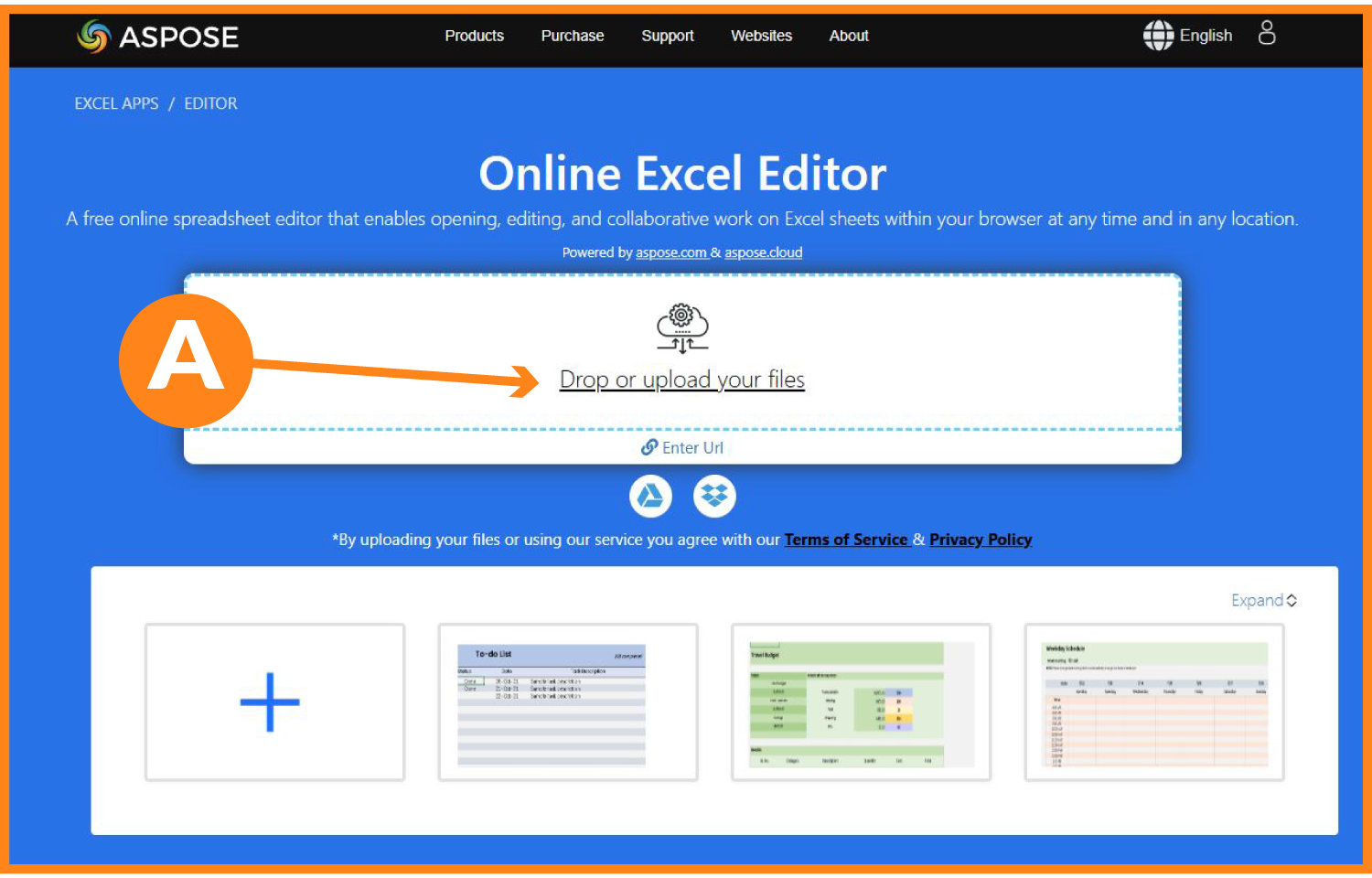
Instruction images created using the free online spreadsheet editor named
Aspose (https://products.aspose.app/cells/editor) but the included formula should work for any spreadsheet editor like Excel, OpenOffice
Calc, OnlyOffice Spreadsheet Editor, or Numbers.
Note: Users handling highly sensitive or confidential documents should be aware of the standard risks associated with any online tool and consider using a locally installed software solution instead.
A
Open Sequential-NumberingFormula.xlsx in your preferred application.
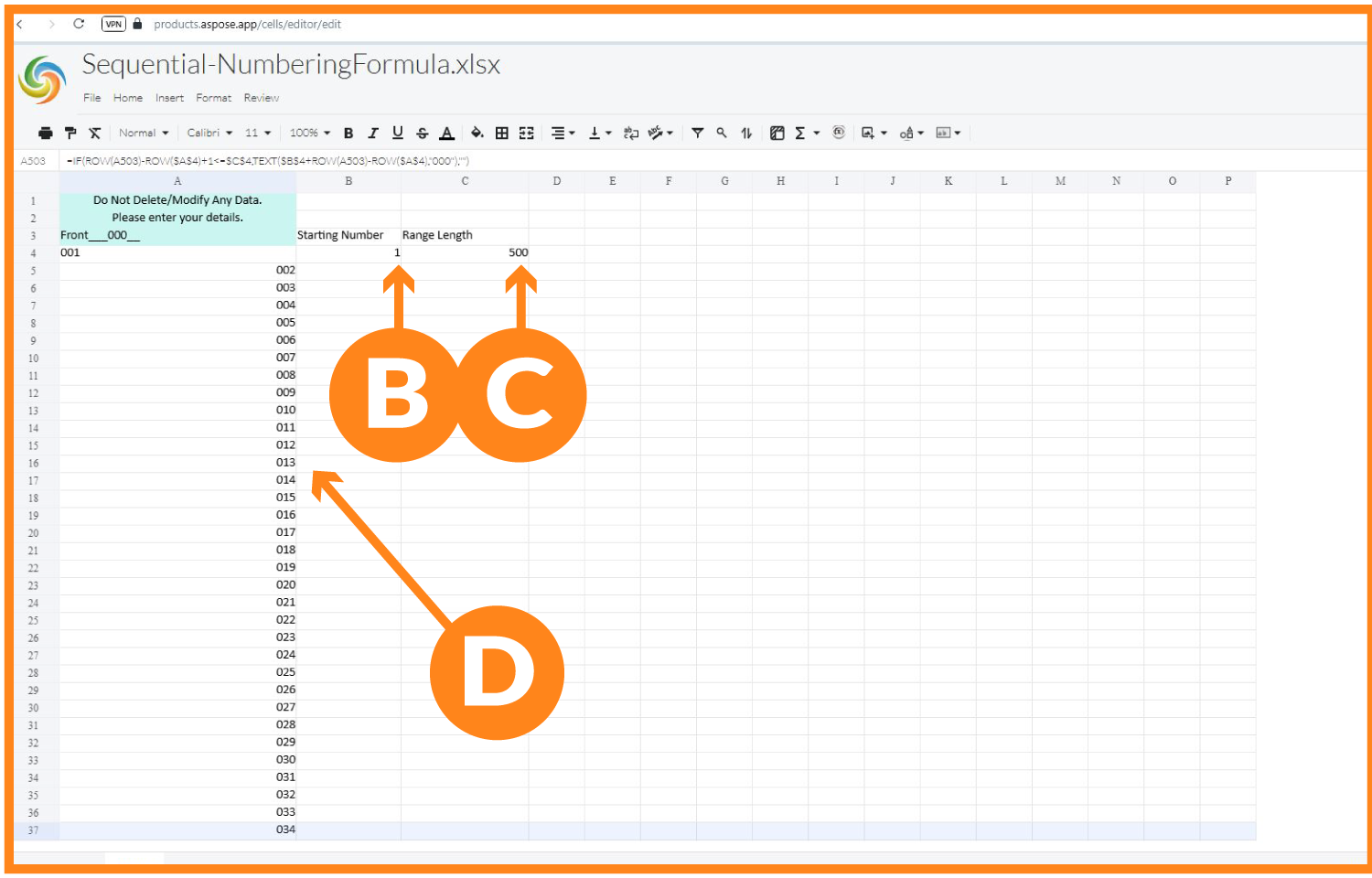
B
Enter the Starting Number in cell B4.
C
Enter the range or quantity of badges (up to 500) in cell C4.
D
Column A will fill up to 500 rows within the range from your starting number. Example: If B4 is 321 & C4 is 222, the output is 321 thru 543
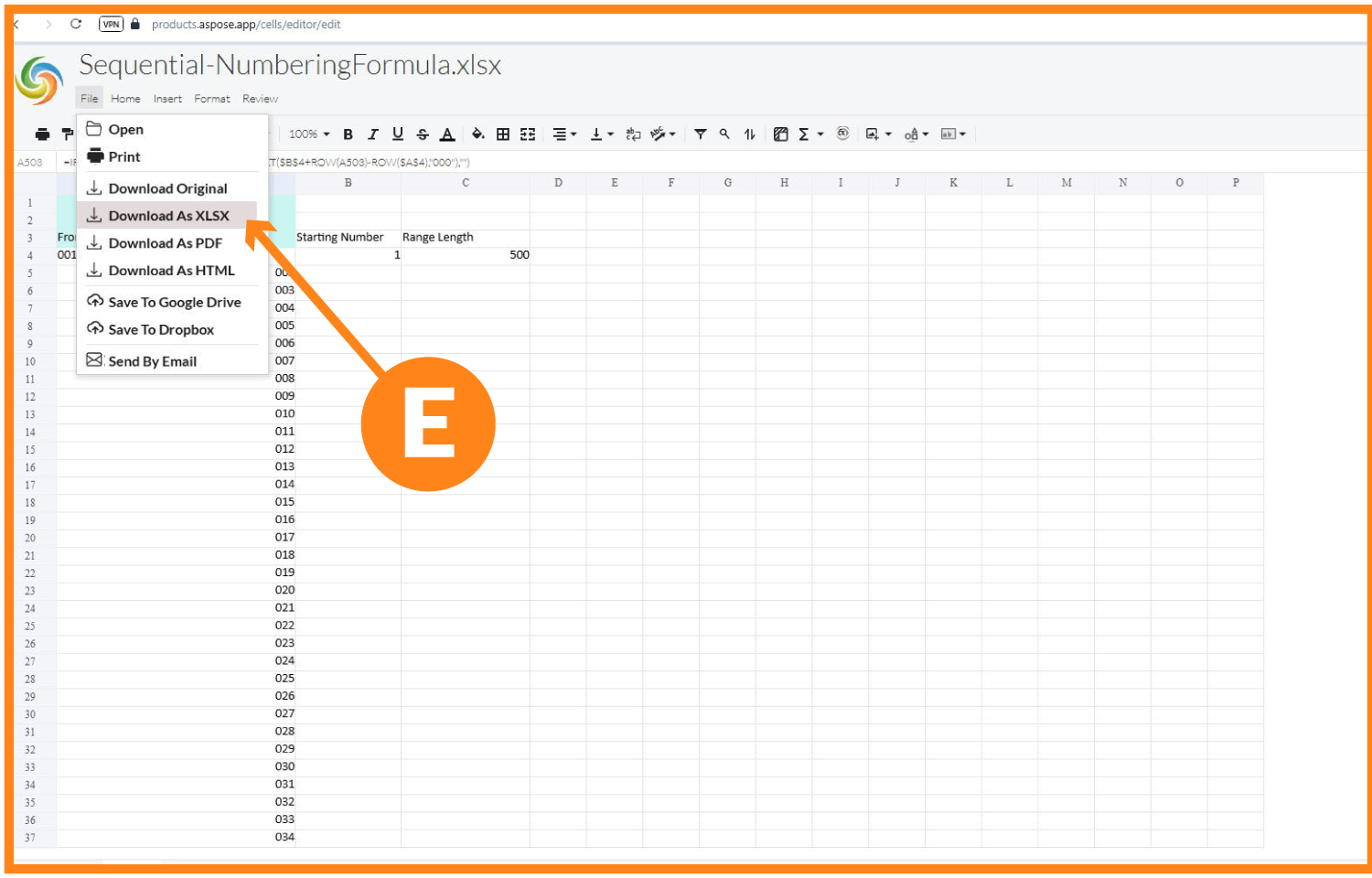
E
Click on the Use your application to save the file as an XLSX
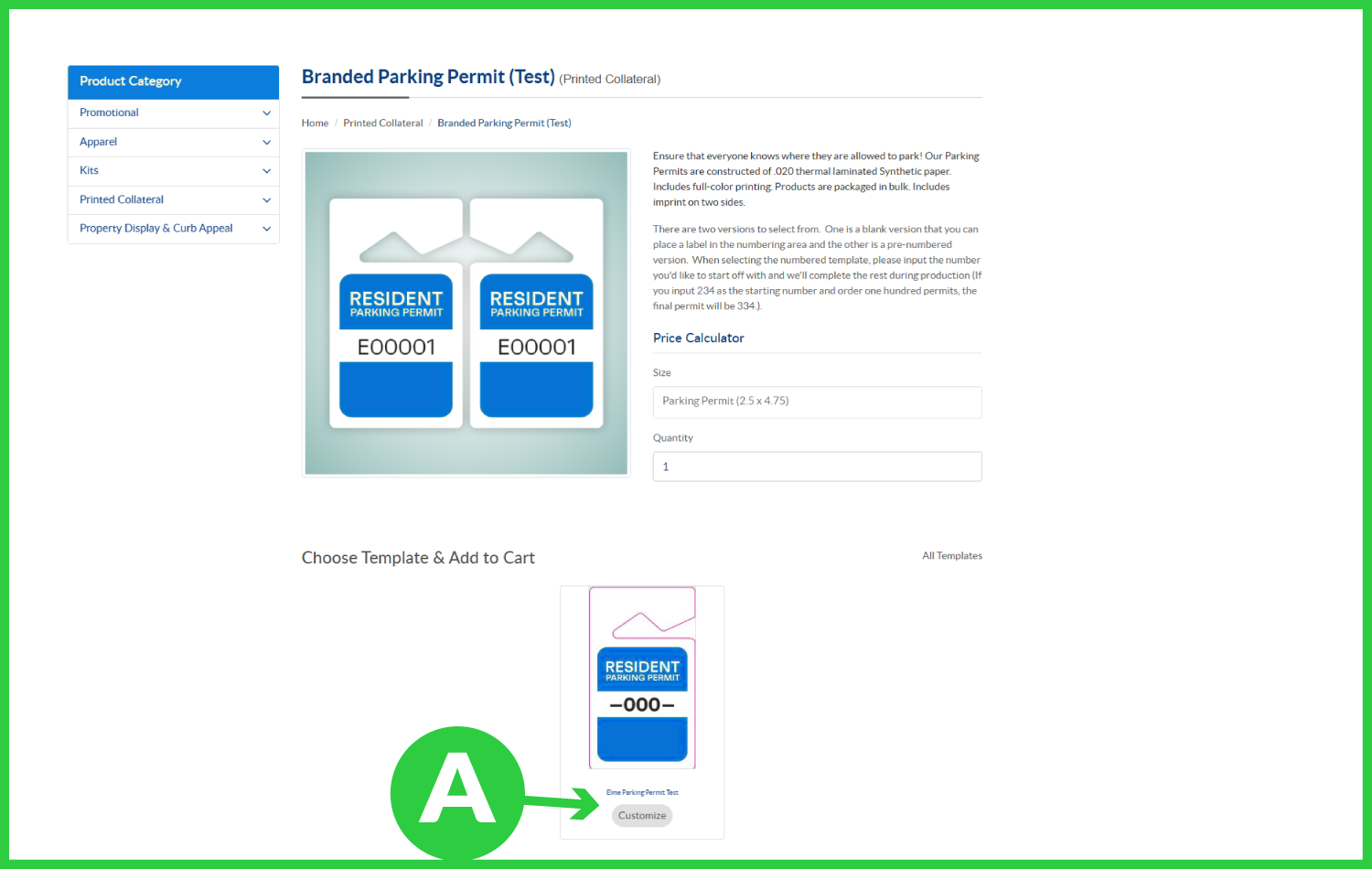
Step 3: Customize Template
A
Click on the "Customize" button under the product template.
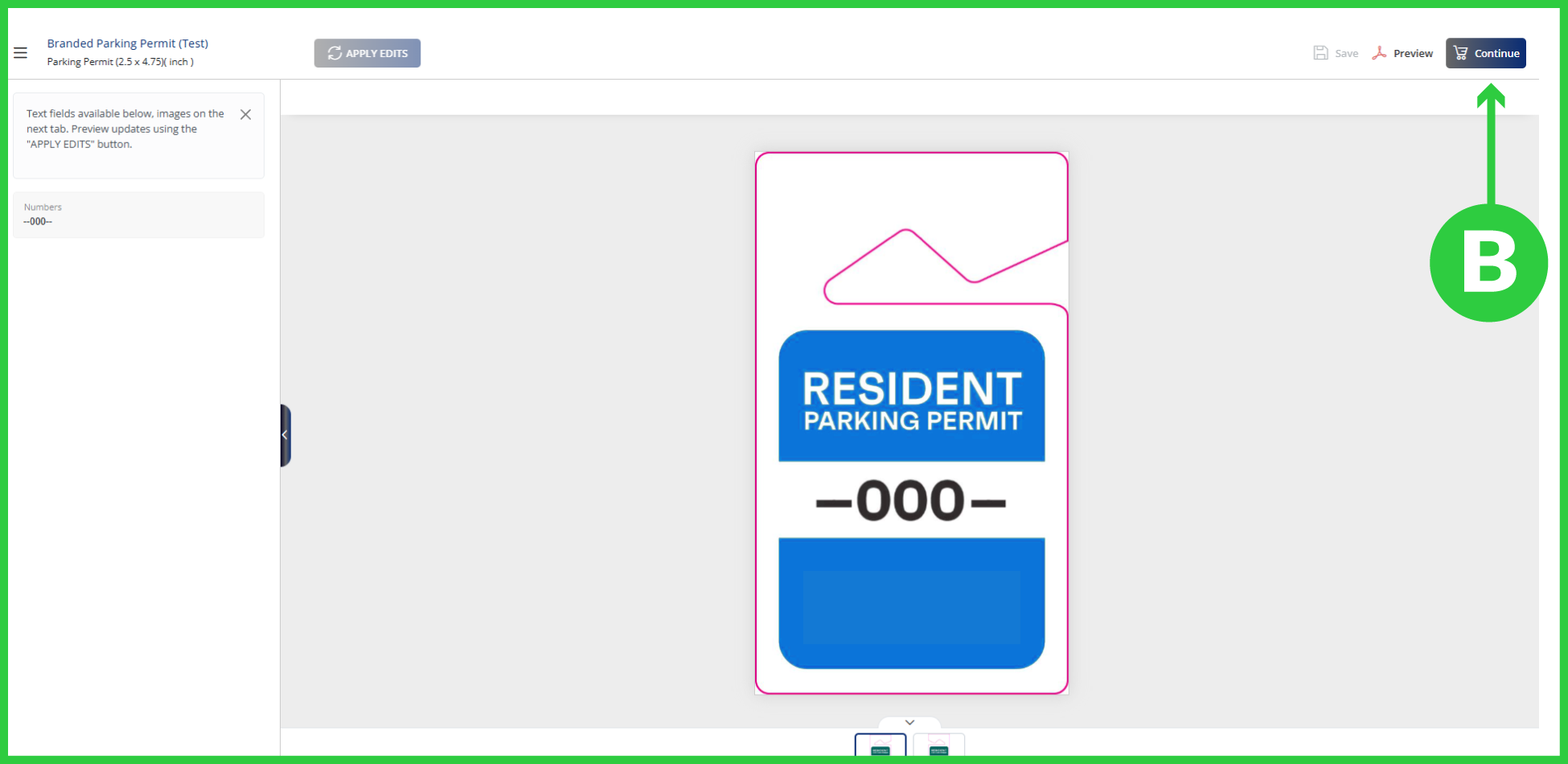
B
The Designer Studio canvas with the product template opens — no action necessary, just click Continue in the upper right corner. Close following message about viewing pages.
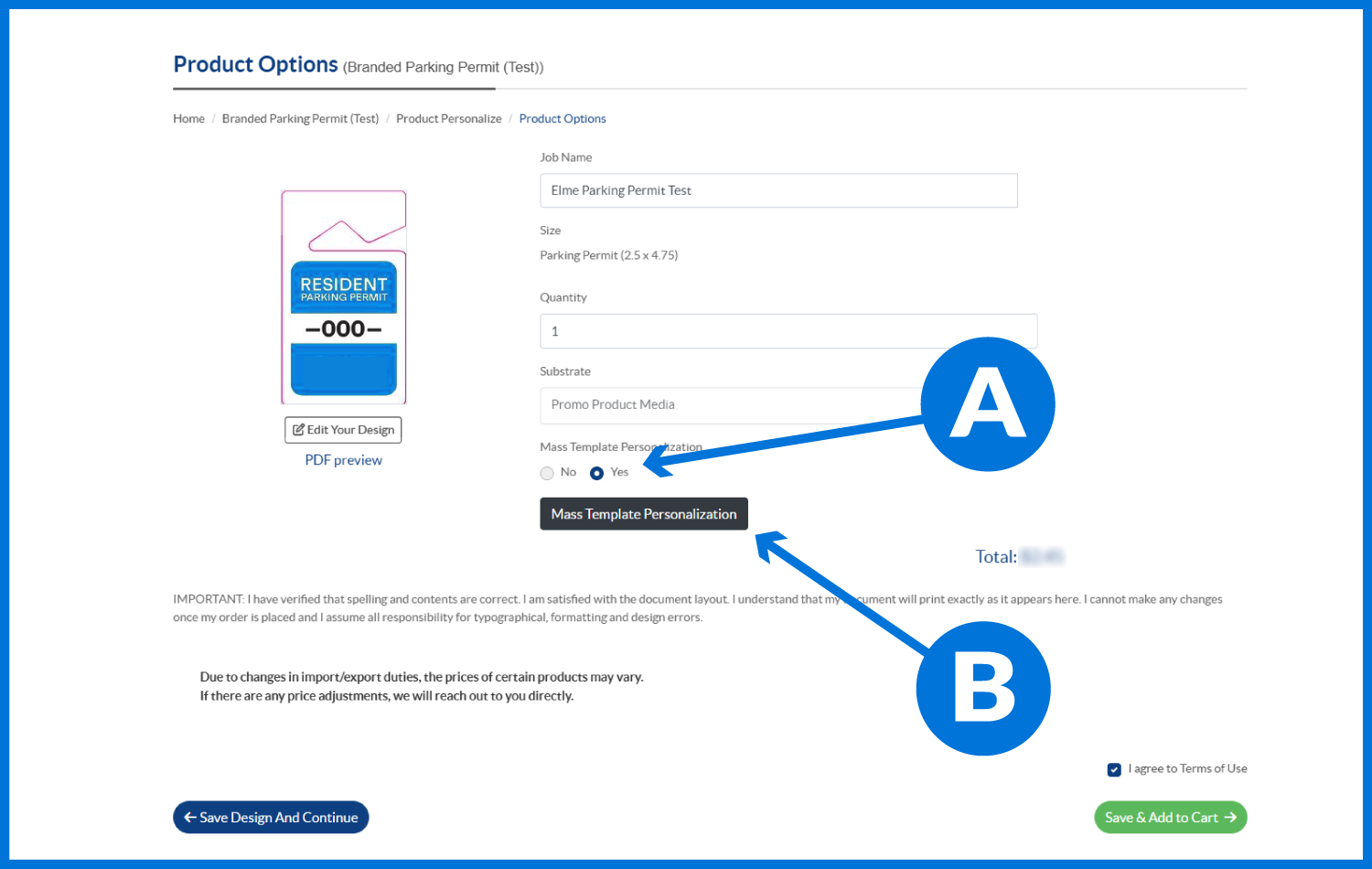
Step 4: Product Variable Personalization
A
Click Yes to "Mass Template Personalization" at the bottom of the product options.
B
Click the black "Mass Template Personalization" button that appears.
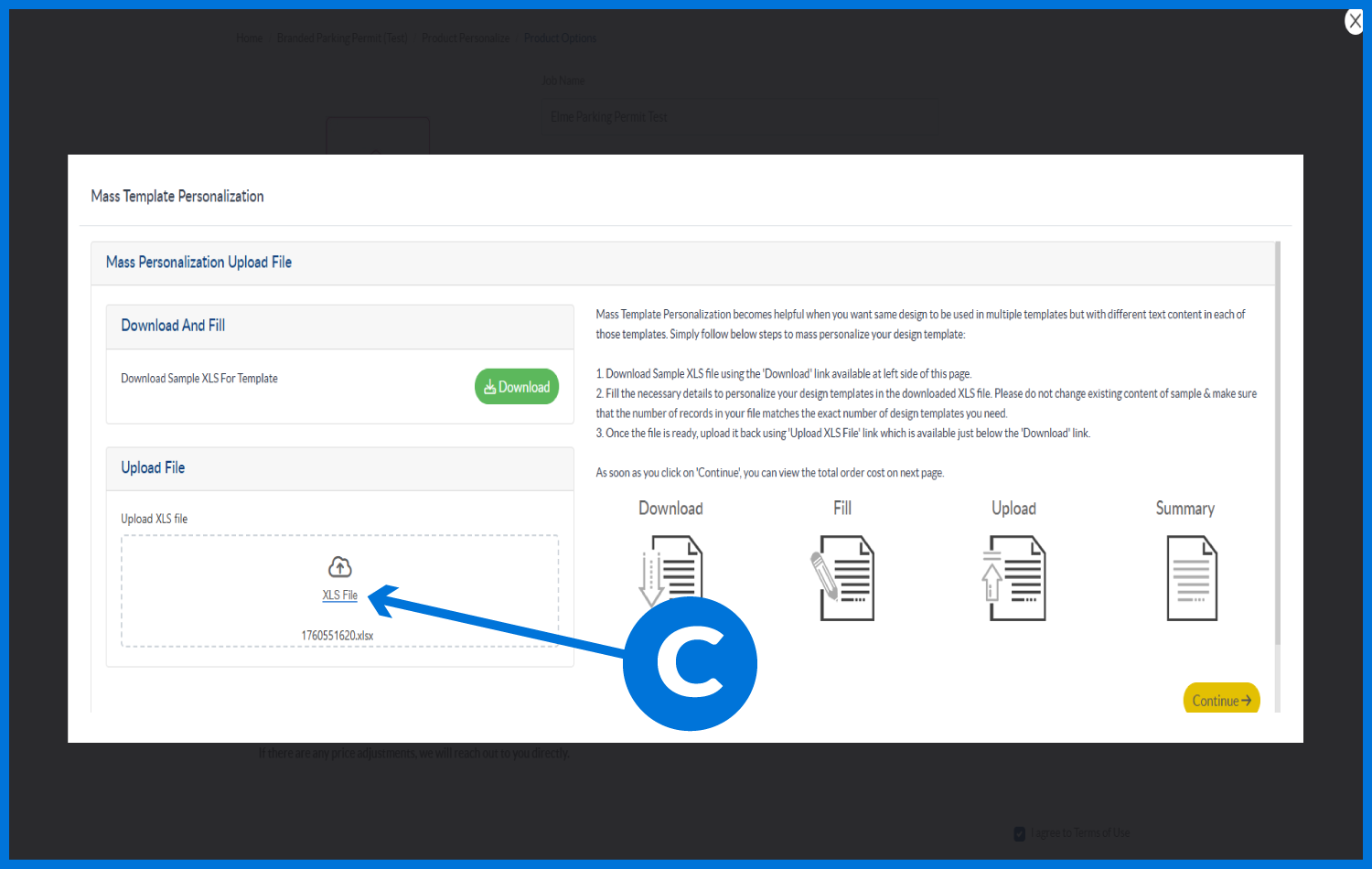
C
Upload the Sequential-NumberingFormula.xlsx you created earlier and continue. Do not download and use the sample file.
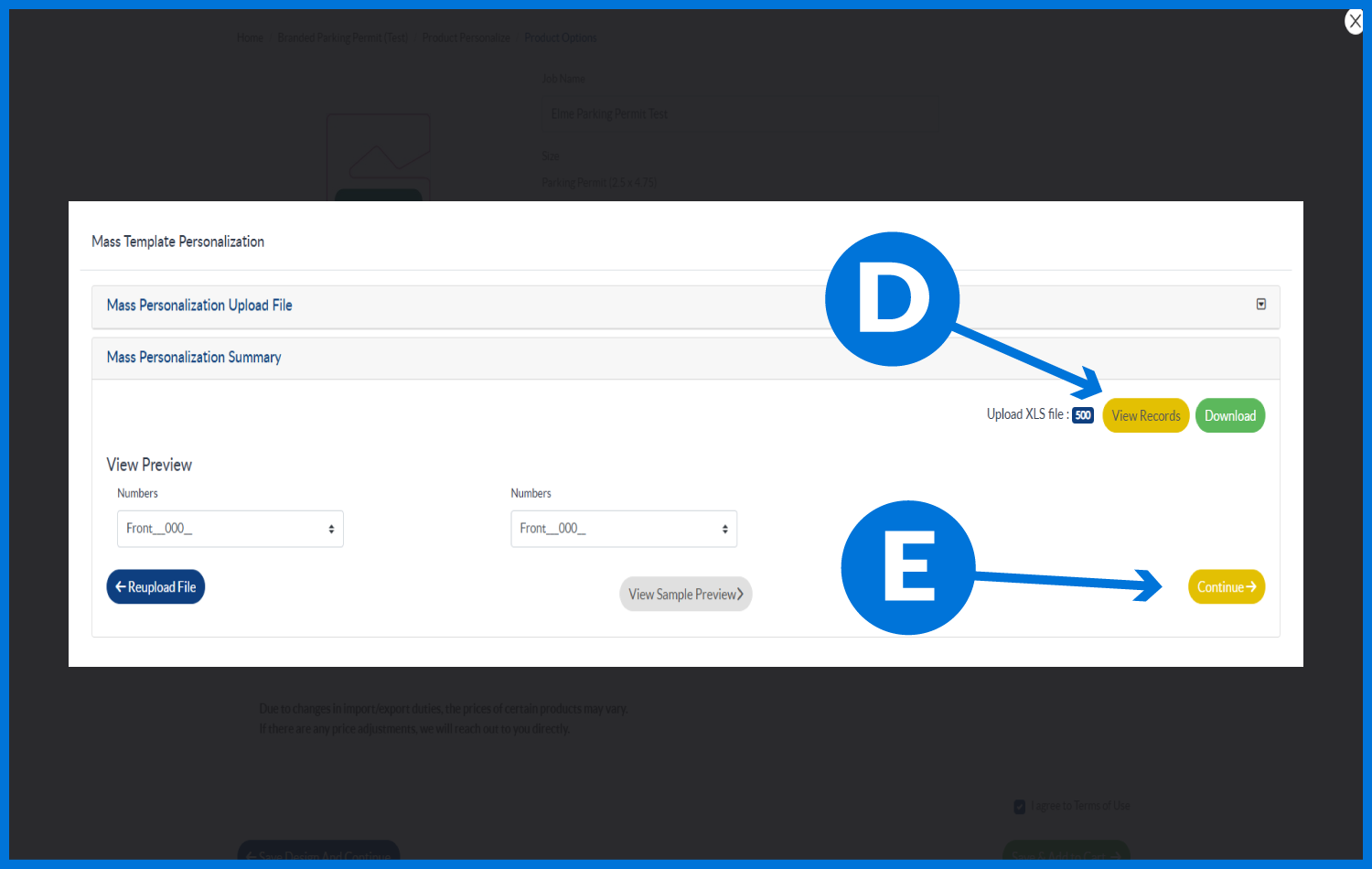
D
Confirm numbering underneath Front__000_ (Column A) matches your intended numbering.
E
Click Continue.
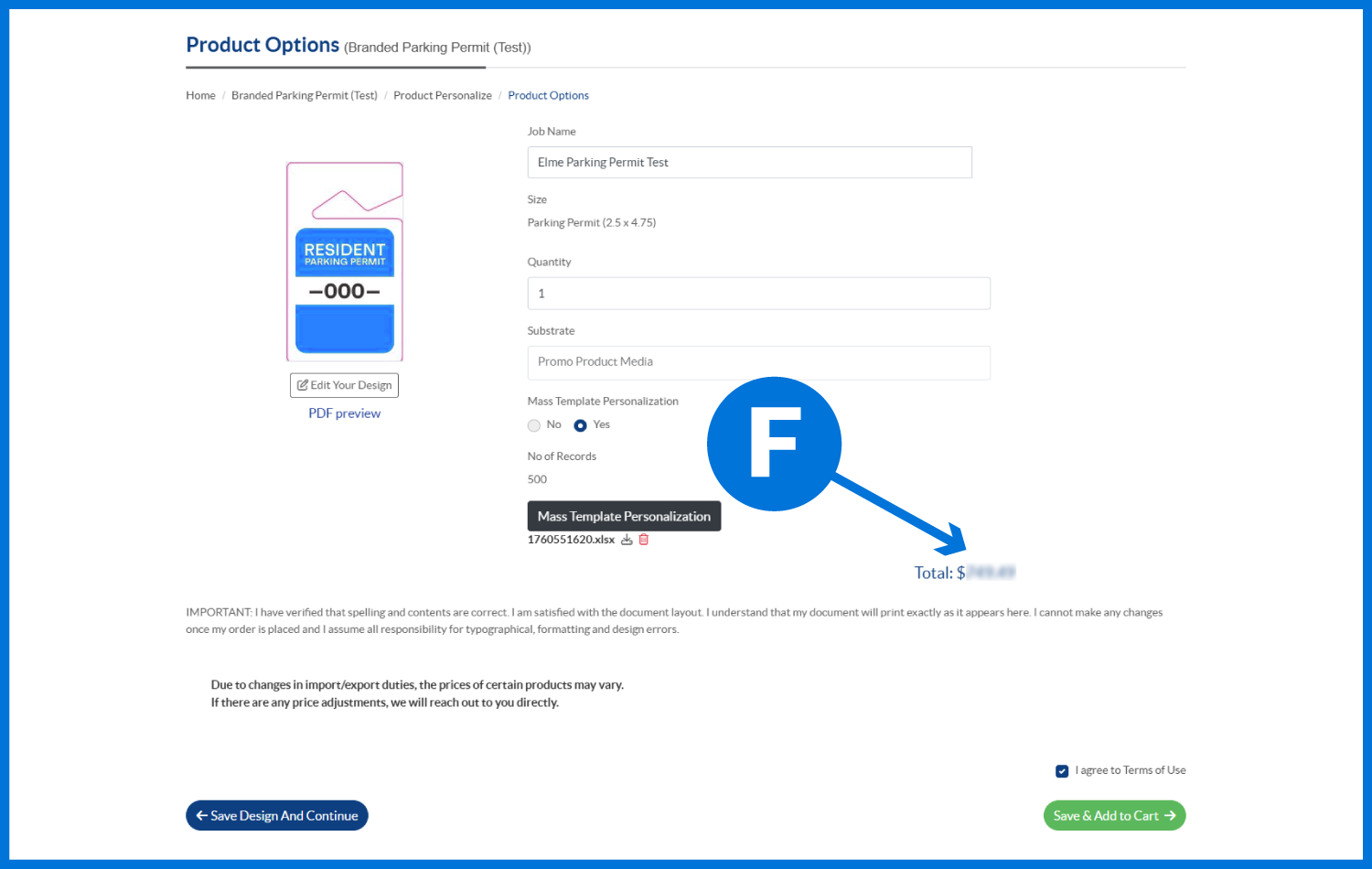
F
Pricing will adjust automatically according to the number of rows in your spreadsheet.